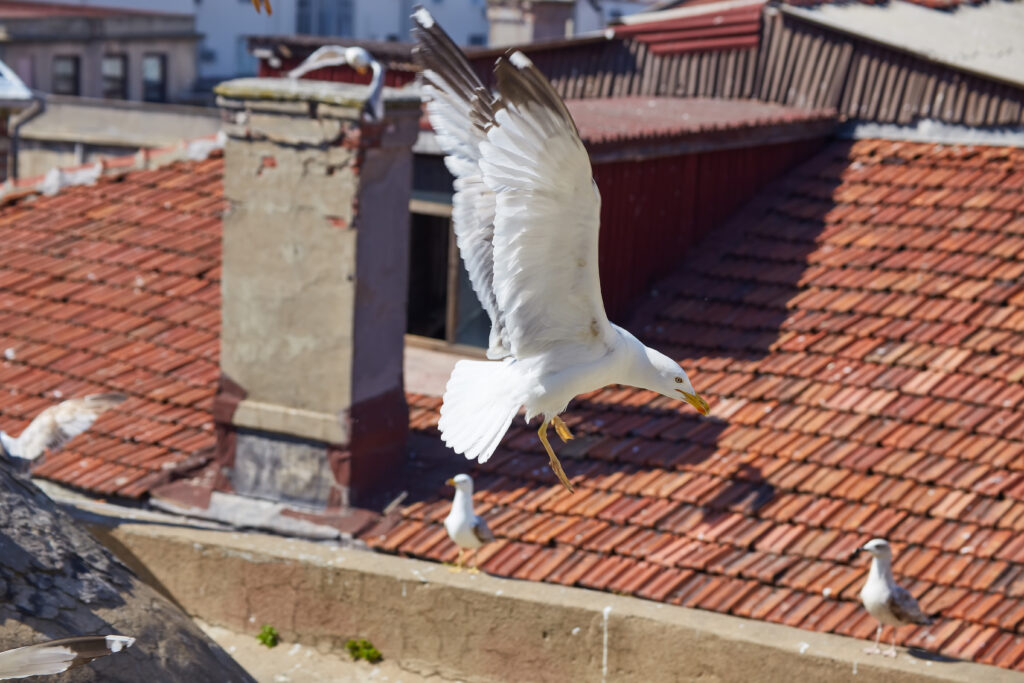
Birds bring life and beauty to our neighborhoods through song and vibrant color. These creatures play a vital role within our local ecosystem by eating annoying insects. However, winged guests frequently create significant challenges for American homeowners settling upon high structures.
Your roof surface provides a perfect vantage point for various avian species. Unfortunately, their presence results in clogged gutters and messy structural damage. Nests frequently block vital ventilation, while acidic droppings slowly eat through expensive roofing materials each season.
Heavy nests can even cause moisture buildup under shingles. This results in wood decay or leaks inside your attic space. Such problems require expensive repairs if left unaddressed.
Learning how to keep birds away effectively requires a balanced approach that acknowledges their ecological importance while protecting one’s property. This involves employing a range of deterrents and maintenance strategies that are humane and environmentally friendly.
The Ecological Role of Birds and Why They Become Pests
The dual role of birds as both beneficial creatures and potential pests is a complex issue that homeowners must navigate. Birds are incredibly valuable to our ecosystem, providing numerous benefits that range from pest control to pollination and seed dispersal. For instance, many bird species feed on insects that can be harmful to crops and gardens, thereby reducing the need for pesticides.
Additionally, birds contribute to the aesthetic and recreational enjoyment of our surroundings, with birdwatching being a popular hobby. However, when birds decide to nest on our roofs, the benefits they provide can be overshadowed by the problems they cause. Nesting activities can lead to clogged gutters, damaged roofing materials, and unsightly droppings that not only create messes but can also corrode surfaces over time.
Understanding why birds are attracted to our roofs is crucial in addressing the issue. Factors such as the availability of food, the presence of potential nesting sites, and the absence of deterrents can make a roof an attractive location for birds. By recognizing these factors, homeowners can take proactive steps to discourage birds from making their roofs a habitat.
Why Birds on Your Roof Are a Major Problem
Roof-dwelling birds can cause a range of problems, from clogged gutters to damaged solar panels. Their presence can lead to significant issues that not only affect the aesthetic appeal of your home but also its structural integrity and functionality.
Birds often nest in gutters and roof areas, leaving behind debris such as twigs, leaves, and droppings. This accumulation can lead to several issues, the most significant of which are related to water management and structural damage.
Clogged Gutters and Water Damage
One of the primary concerns with birds on your roof is the clogging of gutters. When gutters are filled with debris, water cannot flow freely, leading to water accumulation and potential overflow. This can cause water to seep under the roof, damaging ceilings, walls, and foundations.
Furthermore, clogged gutters can also lead to the formation of ice dams during colder months, further exacerbating the risk of water damage. Ensuring that gutters are clear and functioning properly is crucial to preventing these issues.
Solar Panel Efficiency and Structural Damage
Birds nesting under or near solar panels can significantly impact their efficiency. Debris and droppings can cover the panels, reducing their ability to absorb sunlight. Moreover, the structural integrity of the solar panel mounting systems can be compromised by the weight and corrosive nature of bird droppings.
In addition to affecting solar panels, birds can cause structural damage to the roof itself. Their nesting activities can dislodge roofing materials, and their droppings can degrade the roof’s surface over time. This can lead to costly repairs and potentially shorten the lifespan of your roof.
To mitigate these risks, it’s essential to implement effective bird deterrents. By doing so, homeowners can protect their roofs and associated systems, ensuring the longevity and efficiency of their property.
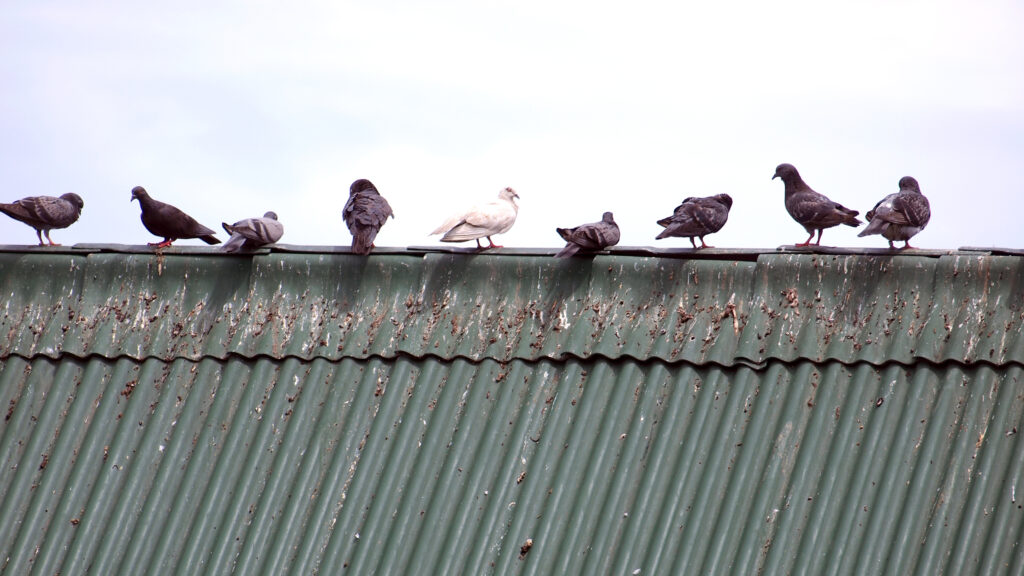
How to Keep Birds Away Using Physical Deterrents
To protect your roof from birds, consider using physical deterrents that are both humane and effective. Physical deterrents are a practical solution to keep birds from roosting on your roof, thereby preventing damage and maintaining the integrity of your property.
Installing Bird Spikes on Ledges
Bird spikes are a popular and effective method for deterring birds from landing and roosting on ledges. These spikes are designed to be harmless to birds but uncomfortable enough to discourage them from settling. The installation of bird spikes should be done carefully to ensure they are securely fastened and cover the entire ledge area.
The benefits of using bird spikes include their durability and low maintenance. They are available in various materials, such as stainless steel and plastic, offering flexibility in terms of cost and aesthetic preferences.
Ridge Guards for Roof Peaks
Ridge guards are another physical deterrent that can be used, especially on roof peaks. They work by covering the ridge with a protective barrier that prevents birds from landing and nesting. Ridge guards are particularly useful for roofs with complex peak designs where bird spikes might not be practical.
When choosing ridge guards, consider the material and design to ensure they are compatible with your roof type and can withstand local weather conditions. Proper installation is crucial to ensure the guards remain in place and function as intended.
By implementing these physical deterrents, homeowners can significantly reduce the risk of bird-related damage to their roofs. It’s essential to inspect your roof regularly to identify any potential entry points or areas where birds might be attempting to nest.
Visual and Sensory Bird Deterrents
Visual and sensory bird deterrents offer a humane and effective way to safeguard your roof from unwanted bird infestations. These deterrents work by either making the area visually unappealing or uncomfortable for birds, or by using sensory stimuli that birds find undesirable.
Reflective Devices and Decoys
Reflective devices and decoys are among the most common visual deterrents used to keep birds away. Reflective devices, such as shiny reflective tapes or balloons, create a visual disturbance that birds find uncomfortable or confusing, discouraging them from landing or roosting.
| Device Type | Description | Effectiveness |
|---|---|---|
| Reflective Tape | Shiny tape that reflects light | High |
| Predator Decoys | Decoys of natural predators | Medium to High |
| Visual Disturbance Balloons | Balloons with reflective or predator-like features | Medium |
These devices are relatively easy to install and can be an effective first line of defense against bird infestations. However, their effectiveness can wane over time as birds become accustomed to them.
Ultrasonic Sound Emitters
Ultrasonic sound emitters produce sounds that are undesirable to birds, encouraging them to leave the area. These devices emit sounds at frequencies that are too high for humans to hear but are uncomfortable for birds.
Ultrasonic sound emitters can be particularly effective in enclosed or semi-enclosed spaces. However, their effectiveness can vary depending on the type of birds and the environment.
By incorporating visual and sensory deterrents into your bird control strategy, you can effectively protect your roof and reduce the risk of damage caused by bird infestations.
Professional Solutions vs. DIY Methods
When it comes to keeping birds away, homeowners often find themselves torn between attempting a DIY solution and hiring a professional. Both approaches have their merits and drawbacks, and the best choice depends on several factors, including the severity of the bird infestation, the type of birds involved, and the homeowner’s comfort level with DIY projects.
The decision to go DIY or professional is not always straightforward. DIY methods can be cost-effective and allow homeowners to address the issue immediately. However, they may not always be effective, especially if the infestation is severe or the methods used are not appropriate for the type of birds involved.
When to Attempt a DIY Fix
DIY bird deterrents can be a good starting point for minor infestations or as a preventive measure. Simple and non-invasive methods such as installing bird spikes, using visual deterrents like reflective devices or decoys, and sealing entry points can be effective. These methods are relatively easy to implement and can be cost-effective.
For instance, bird spikes can be installed on ledges and rooflines to prevent birds from landing. Visual deterrents like shiny reflective tapes or predator decoys can also be used to scare birds away. These methods are generally easy to DIY and can be quite effective for small-scale issues.
| DIY Method | Effectiveness | Cost |
|---|---|---|
| Bird Spikes | High | Moderate |
| Visual Deterrents | Moderate | Low |
| Sealing Entry Points | High | Moderate |
Knowing When to Call the Pros
While DIY methods can be effective for minor issues, there are situations where calling professionals is the better option. If the bird infestation is severe, involves protected or aggressive bird species, or if the homeowner is not comfortable with heights or DIY projects, it’s best to seek professional help.
Professional bird control services have the expertise and equipment to handle complex situations safely and effectively. They can assess the situation, recommend the most appropriate deterrents, and implement solutions that are tailored to the specific problem.
For example, professionals can install ridge guards on roof peaks, a task that may require specialized equipment and expertise. They can also provide guidance on how to maintain your roof and prevent future bird-related issues.
Leveraging Technology for Roof Protection
In the quest to protect your roof from unwanted avian visitors, leveraging technology can be a game-changer. Advanced technologies are now available to help homeowners detect and prevent bird-related issues on their roofs.
One of the most significant advancements in this area is the use of drone inspections. These inspections allow for a detailed examination of your roof without the need for ladders or scaffolding, making the process safer and more efficient.
The Role of Drone Inspections in Identifying Nesting Spots
Drone inspections play a crucial role in identifying potential nesting spots on your roof. By using high-resolution cameras and aerial technology, drones can capture detailed images of your roof, allowing professionals to identify areas where birds may be nesting or attempting to nest.
This information is invaluable in helping homeowners take proactive steps to deter birds and protect their roofs. With the data collected from drone inspections, you can implement targeted deterrents to prevent birds from making your roof their home.
How Go Roof Guys Utilize Aerial Technology to Assess Damage
At Go Roof Guys, aerial technology is used to assess roof damage and identify potential issues related to bird activity. Their team utilizes drone inspections to provide a comprehensive assessment of your roof’s condition, including any damage caused by birds or other factors.
Notably, Go Roof Guys offers free drone inspections to identify nesting spots and assess damage. This service allows homeowners to understand the extent of any bird-related issues and take informed action to protect their roofs.
| Benefits of Drone Inspections | Traditional Inspection Methods | Aerial Technology with Drones |
|---|---|---|
| Safety | Requires ladders or scaffolding, posing a risk to inspectors | Eliminates the need for ladders or scaffolding, reducing risk |
| Efficiency | Can be time-consuming and labor-intensive | Quickly captures detailed images of the roof, reducing inspection time |
| Accuracy | Limited by the inspector’s ability to visually examine the roof | Provides high-resolution images for detailed analysis |
Essential Maintenance Tips to Discourage Birds
Maintaining your roof is crucial in discouraging birds from making it their home. Regular maintenance not only keeps your roof in good condition but also deters birds by removing attractants and sealing off potential nesting sites.
By following a few simple maintenance tips, you can significantly reduce the likelihood of birds inhabiting your roof. This includes regular cleaning, debris removal, and ensuring that all entry points are sealed.
Regular Roof Cleaning and Debris Removal
One of the most effective ways to discourage birds from roosting on your roof is through regular cleaning and debris removal. Birds are often attracted to roofs with debris such as twigs, leaves, and other nesting materials.
- Remove any debris, such as leaves or branches, that may have accumulated on your roof.
- Clean your gutters regularly to prevent clogging, which can attract birds looking for nesting materials.
- Trim tree branches that are close to your roof to reduce the likelihood of birds jumping onto your roof.
Regular roof cleaning not only removes attractants but also allows you to inspect your roof for any damage or potential entry points.
Sealing Entry Points and Vents
Birds can squeeze through surprisingly small openings, so it’s essential to seal all potential entry points around your roof, including vents and chimneys.
Here are some tips for sealing entry points:
- Inspect your roof for any gaps or holes, particularly around vents, chimneys, and skylights.
- Use durable materials like metal or hardware cloth to cover vents and chimneys, ensuring that the mesh is fine enough to prevent birds from passing through.
- Seal any gaps or cracks with a high-quality sealant to prevent birds from entering.
| Maintenance Task | Frequency | Benefits |
|---|---|---|
| Roof Cleaning | At least twice a year | Removes debris, reduces attractants for birds |
| Gutter Cleaning | Every 3-4 months | Prevents clogging, reduces nesting material |
| Sealing Entry Points | Annually | Prevents birds from entering and nesting |
By implementing these essential maintenance tips, you can effectively discourage birds from inhabiting your roof, protecting your home from potential damage.
Conclusion
Keeping birds away from your roof is crucial to prevent damage and maintain your home’s integrity. Throughout this article, we’ve explored various effective deterrents and maintenance tips to help you achieve this goal.
From physical deterrents like bird spikes and ridge guards to visual and sensory deterrents such as reflective devices and ultrasonic sound emitters, there are numerous ways to keep birds at bay. Regular roof cleaning, debris removal, and sealing entry points are also essential to discourage birds from nesting on your roof.
By understanding how to keep birds away and implementing these strategies, you can protect your roof and ensure the longevity of your home. For homeowners in the United States, taking proactive measures can make a significant difference in maintaining a bird-free roof.
For a comprehensive assessment and tailored solutions, consider consulting professionals who utilize advanced technologies like drone inspections to identify potential issues.