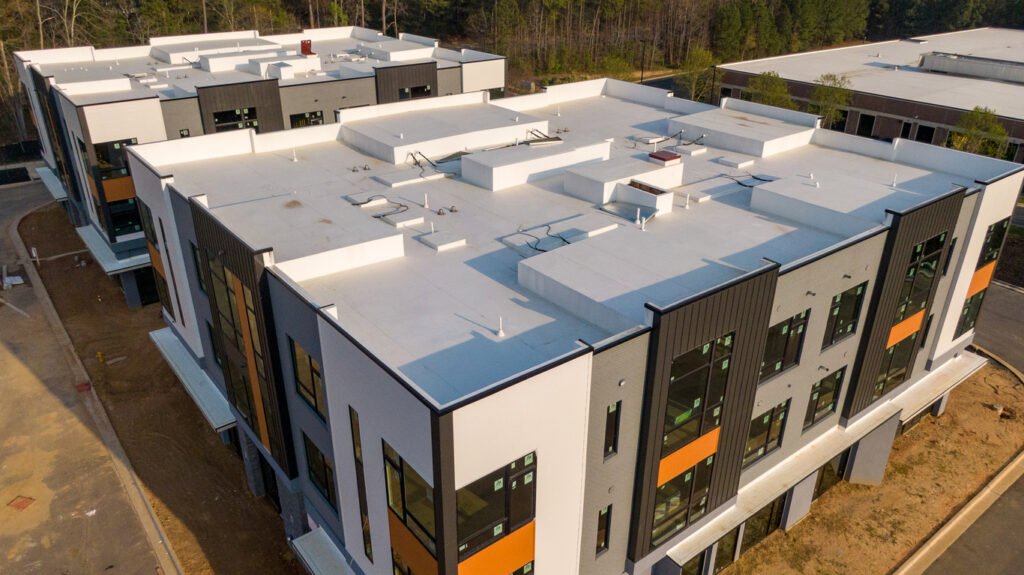
When people search for types of commercial roofing, they are usually asking about three different things without realizing it: the shape of the roof, the system used to waterproof it, and the material that system is made from. A flat roof, for example, might use a single-ply system made of TPO, or it might use built-up roofing made from layered asphalt. Understanding this distinction makes it much easier to compare options and talk to a contractor about what actually fits your building.
This guide focuses on the roofing systems and materials most commonly used on commercial buildings today, along with the pros and cons of each, so you can walk into a roofing decision with a clearer picture of what you are choosing between.
Roof Shape: A Quick Starting Point
Before getting into systems and materials, it helps to know that commercial roofs generally fall into two shape categories. Flat and low-slope roofs are by far the most common on commercial buildings, since they are cheaper to build over large areas and make good use of rooftop space for HVAC equipment. Pitched roofs show up more often on smaller commercial buildings, retail storefronts, and buildings designed to match a more residential look. The shape of your roof narrows down which systems are even an option, since some materials only make sense on a flat surface.
Single-Ply Membrane Systems
Single-ply membranes are large sheets of synthetic material rolled out across the roof and either glued down, mechanically fastened, or heat-welded at the seams. This category includes three materials that get compared often:
- TPO reflects heat well, which helps lower cooling costs in the summer, and it welds into strong, watertight seams.
- PVC shares that same heat-reflective quality but also resists oils, grease, and chemical exposure, which makes it a common choice for restaurants and industrial buildings.
- EPDM, sometimes called rubber roofing, holds up especially well through repeated freezing and thawing, which matters in a climate like Kentucky’s where winter temperatures swing above and below freezing throughout the season.
All three are lightweight, install relatively quickly, and flex with the building rather than cracking. The tradeoff is that single-ply membranes can be punctured by dropped tools, foot traffic, or storm debris, so proper installation and periodic inspection matter more than they would with a heavier system.
Built-Up Roofing (BUR)
Built-up roofing is one of the older commercial systems still in wide use, and for good reason. It is built from alternating layers of asphalt and reinforcing fabric, topped with a layer of gravel or a reflective coating. Because it is made of multiple layers, BUR is naturally resistant to punctures and holds up well under regular foot traffic, which makes it a common choice for roofs that need frequent access for HVAC maintenance.
The downsides are weight and installation time. BUR is heavier than single-ply systems, which means the building’s structure needs to support it, and installation takes longer since each layer has to be applied and cured properly.
Modified Bitumen Roofing
Modified bitumen takes the same asphalt base used in built-up roofing and reinforces it with rubber or plastic additives, which makes it more flexible in both hot and cold weather. It is installed in rolled sheets that can be torched down, cold-applied with adhesive, or self-adhered, depending on the product and the building’s needs.
This system handles foot traffic well and is relatively easy to patch if damage occurs, since repairs can often be made to a specific section rather than the whole roof. The main consideration is UV exposure. Without a protective cap sheet or coating, the surface can degrade faster under direct sun, so this detail is worth confirming with your installer.
Metal Roofing
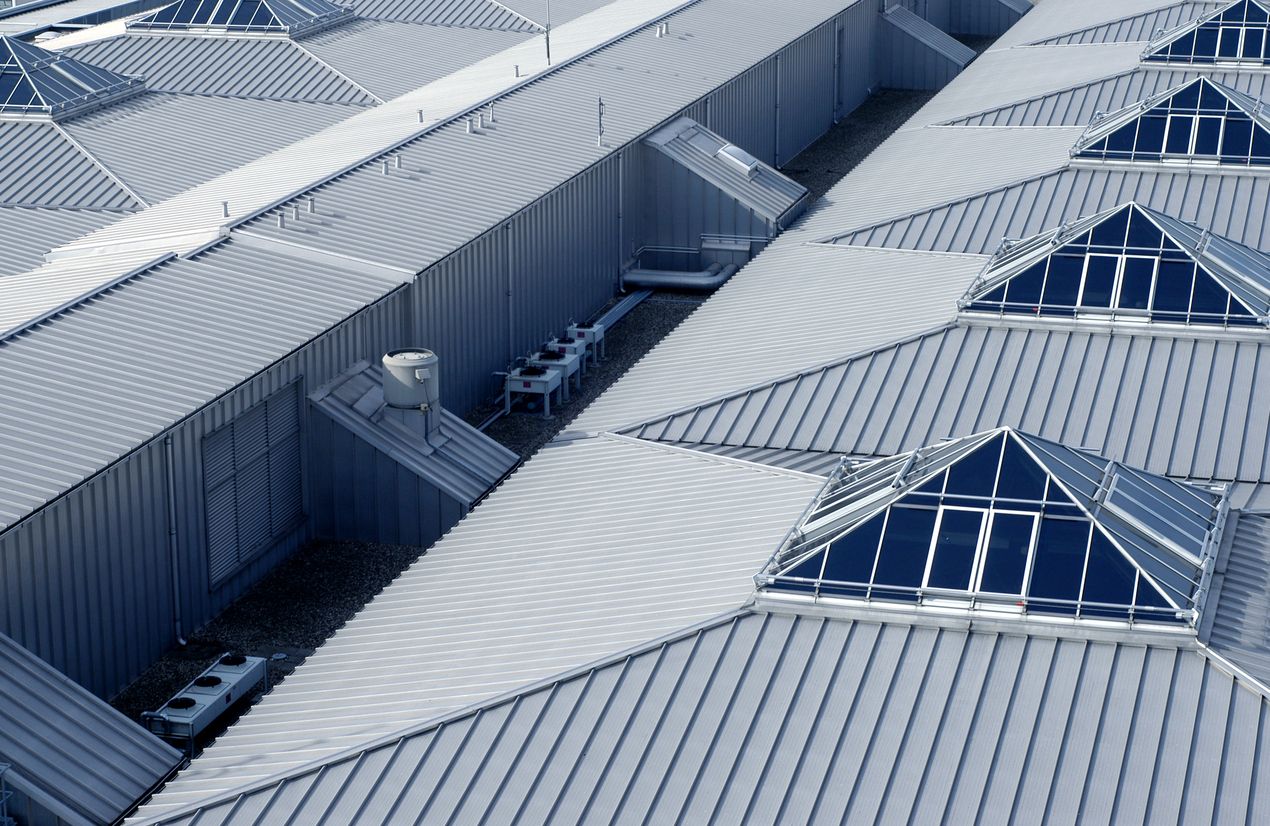
Metal roofing shows up on commercial buildings with pitched or steeply sloped rooflines, and it is one of the longest-lasting options available, often outlasting other systems by decades with proper maintenance. Standing seam panels are the most common configuration for commercial use, since the raised seams shed water efficiently and reduce the risk of leaks at the seams themselves.
The main drawback is upfront cost, which tends to run higher than membrane or asphalt options. Over a long enough timeline, though, the extended lifespan often closes that gap.
Spray Polyurethane Foam (SPF) Roofing
SPF is applied as a liquid that expands into foam and hardens into a seamless surface, which makes it one of the few systems that can be installed directly over an existing roof without tearing it off first. This makes it a popular option for retrofits and for buildings with unusual shapes or a lot of rooftop penetrations, since the foam simply fills in around obstacles.
SPF offers strong insulation value, which can meaningfully reduce heating and cooling costs. The tradeoff is that it needs to be installed in dry, moderate weather, which can be a scheduling challenge in regions with unpredictable spring or fall conditions. The protective coating also needs to be reapplied on a regular cycle, typically every ten to fifteen years, to keep the system performing well.
Roof Coating Systems
Roof coatings are a bit different from the systems above, since they are usually applied over an existing roof rather than installed as a standalone system. A liquid coating, commonly silicone, acrylic, or urethane, is applied directly to a roof’s surface, where it cures into a seamless, waterproof layer.
Coatings are often used to extend the life of an aging roof, add UV protection, and improve energy efficiency, all without the cost of a full replacement. They are not a fix for a roof with significant structural damage, but for a roof that is otherwise sound and just showing wear, a coating can be a cost-effective way to buy several more years of service.
Asphalt Shingles
Asphalt shingles are more familiar from residential roofs, but they do show up on smaller commercial buildings, particularly ones with a pitched roofline, like small offices, retail shops, or restaurants built to look residential. The appeal is straightforward: asphalt shingles are affordable and easy to source.
The tradeoff is a shorter lifespan compared to most commercial-grade systems, along with more vulnerability to high winds and hail. For a small, sloped commercial building on a tighter budget, though, asphalt remains a reasonable option.
Green Roofing
Green roofs add a layer of vegetation over a waterproof membrane, most often on flat commercial roofs in urban areas. Beyond the visual appeal, a green roof adds insulation, helps manage stormwater runoff, and can improve air quality around the building.
The tradeoffs are real, though. Not every building can support the added weight without additional structural engineering, and a green roof needs ongoing care, including irrigation and occasional replanting, to stay healthy.
Comparing Commercial Roofing Systems
| System | Typical Lifespan | Best Suited For | Key Consideration |
| Single-Ply (TPO/PVC/EPDM) | 20 to 30 years | Flat and low-slope roofs | Vulnerable to punctures |
| Built-Up Roofing (BUR) | 20 to 30 years | Roofs with frequent foot traffic | Heavy, longer install time |
| Modified Bitumen | 15 to 20 years | Roofs needing easy spot repairs | Needs UV protection |
| Metal | 40 to 60 years | Pitched commercial roofs | Higher upfront cost |
| SPF | 20 to 30 years with recoating | Retrofits, irregular rooflines | Requires dry install conditions |
| Roof Coatings | Extends existing roof 5 to 10+ years | Aging roofs in otherwise good condition | Not a fix for structural damage |
| Asphalt Shingles | 15 to 20 years | Small pitched commercial buildings | Shorter lifespan, storm-prone |
| Green Roofing | 30 to 50 years (membrane) | Urban buildings prioritizing sustainability | Needs structural support and upkeep |
Choosing the Right System for Your Building
The right choice depends on more than personal preference. Roof shape narrows the field first, since flat roofs and pitched roofs are not interchangeable in terms of what systems work. From there, budget, expected lifespan, and how the roof will be used day to day all matter. A roof that needs to support regular HVAC access is a different decision than a roof that just needs to keep the weather out.
Local climate plays a bigger role than many building owners expect. In a region like Louisville, with humid summers, cold winters, and the occasional severe storm, materials that hold up to temperature swings and wind-driven rain, like EPDM or metal, often perform better over time than options chosen purely on upfront cost.
Frequently Asked Questions
What is the most common type of commercial roofing?
Single-ply membrane systems, particularly TPO, are among the most widely used on flat commercial roofs today, largely due to their balance of cost, energy efficiency, and ease of installation.
Which commercial roofing system lasts the longest?
Metal roofing typically has the longest lifespan among common commercial systems, often performing well for 40 years or more with proper maintenance.
Can I install a new roofing system over my existing commercial roof?
In some cases, yes. Spray polyurethane foam and roof coatings are both designed to be applied over an existing roof, which can reduce cost and disruption compared to a full tear-off.
How do I know which commercial roofing type is right for my building?
The best approach is a professional roof assessment that takes into account your building’s shape, structural capacity, budget, and local climate, rather than choosing a system based on cost alone.
Final Thoughts
There is no single best type of commercial roofing, only the system and material that best fit a specific building, budget, and climate. Understanding the difference between roof shape, system, and material makes it much easier to have a productive conversation with a roofing contractor and to choose an option that will hold up for the long run rather than needing early replacement.