
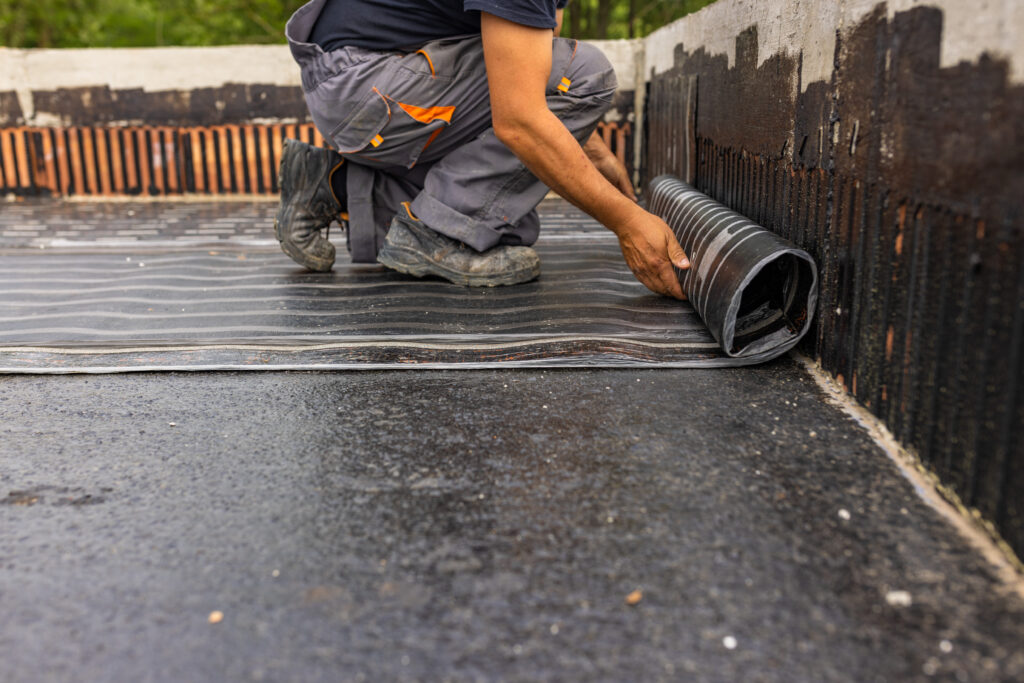
Selecting the right roof for a flat or low-slope commercial building is a major financial decision. Commercial buildings rarely use traditional shingles. Instead, they rely on specialized roofing materials designed to handle standing water, high UV exposure, and heavy foot traffic. Single-ply membranes are the most commonly selected roof type on the market today.
Deciding between TPO vs EPDM vs PVC can seem overwhelming, but understanding their strengths and weaknesses will help you choose the right roof material.
The Single-Ply Solution
Single-ply roofing systems consist of flexible sheets of synthetic materials. These sheets are made to strict quality standards and then installed in a single layer over the roof deck. They have become the industry standard because they are versatile and widely recommended for low-slope commercial roofs.
Whether you need energy efficiency, chemical resistance, or long-term durability, there is a single-ply solution for your needs.
The three heavyweights in this category are TPO, EPDM, and PVC. While they often look similar from a distance, their performance varies greatly. Deciding between TPO vs EPDM vs PVC requires an understanding of your local weather, your building’s usage, and your long-term maintenance budget.
What are TPO, EPDM, and PVC?
To make an informed choice, you first need to understand the unique traits of each material.
TPO (Thermoplastic Polyolefin)
TPO is the newest of the three materials, but has quickly become a top seller. It is a blend of polypropylene and ethylene-propylene rubber, typically available in white or light gray.
Advantages
TPO is extremely reflective, making it a “cool roof” choice. It bounces UV rays away from the building, cutting cooling costs in the summer. It naturally resists mold and punctures. Because it is a thermoplastic, the seams are heat-welded, creating a bond stronger than the membrane itself.
Disadvantages
As new technologies have emerged, TPO formulas have changed over the years. Some older products struggled with heat aging, though top-tier manufacturers have largely fixed these issues.
Ideal Application
Modern retail centers and warehouses in sunny climates where energy saving is a top priority.
EPDM (Ethylene Propylene Diene Terpolymer)
Often referred to as “rubber roofing,” EPDM has been a go-to for decades. It is a synthetic rubber membrane most commonly installed in black.
Advantages
EPDM is incredibly tough against hail and extreme temperature swings. It stays flexible even in freezing conditions and is generally the most affordable material upfront. Most contractors are very experienced with installation.
Disadvantages
In the debate of EPDM vs TPO, the biggest drawback for EPDM is its seams. Unlike TPO, EPDM seams are joined using adhesive tape, which can pull apart over time, leading to leaks. Additionally, black EPDM soaks up heat, which can increase summer cooling costs.
Ideal Application
Industrial facilities in northern climates, where absorbing heat is a benefit during long winters.
PVC (Polyvinyl Chloride)
PVC is the “premium” option in the single-ply world. It is a reinforced membrane that often lasts 50 years or more.
Advantages
PVC is exceptionally resistant to chemicals, oils, and grease. It is fire-resistant and hard to ignite. Like TPO, its seams are heat-welded for superior strength. It is the strongest of the three membranes.
Disadvantages
PVC is typically the most expensive option. It contains plasticizers for flexibility; in lower-quality versions, these can dry out, making the roof brittle over time.
Ideal Application
Restaurants (due to grease vents), airports, and manufacturing plants where chemical exposure is a risk.

Seams, Costs, and Installation
When evaluating TPO vs EPDM vs PVC, three practical factors drive the final decision: seam strength, cost, and installation difficulty. When comparing EPDM vs TPO, local weather patterns will affect material performance differently.
Seams: Heat-Welding vs. Tape
The seams are where a roof fails first.
- TPO and PVC use heat-welded seams. A robotic hot-air welder fuses the two sheets at the molecular level, creating a single surface that is nearly impossible to pull apart.
- EPDM relies on seam tape and primers. While modern tapes are better than they used to be, they are still a “glue” bond. If the installer doesn’t clean the membrane perfectly, the seam will eventually fail.
Costs: Upfront vs. Long-Term
Determining the winner of TPO vs EPDM vs PVC often comes down to the bottom line. EPDM usually has the lowest material cost, but higher energy bills may follow. TPO offers a balanced mid-range price with high energy savings. PVC has the highest upfront cost, because you are paying for specialized chemical resistance and a durable performance.
Installation Methods
All can be installed in three ways:
- Fastened to the roof deck with screws. Fast and cost-effective.
- Glued across the entire surface. Best for high-wind areas.
- Laid loosely and held by stones. Less common today due to weight.
When you look at TPO vs EPDM vs PVC, remember that installation quality has a greater impact on longevity than material choice.
Maintenance and Long-Term Care
Regardless of the material you choose, regular inspections are the key to maximizing your investment and avoiding the “out of sight, out of mind” trap that often leads to premature failure.
For heat-welded systems like TPO (Thermoplastic Polyolefin) and PVC (Polyvinyl Chloride), maintenance is often as simple as keeping drains clear and checking for physical punctures from rooftop equipment or foot traffic.
Since these roofs are light-colored, occasional cleaning with non-abrasive solutions can help maintain their reflective properties and energy efficiency, ensuring your cooling costs remain low during peak summer months.
For EPDM (Ethylene Propylene Diene Terpolymer) systems, you must pay closer attention to the adhesive seams and flashings, as these can shrink or pull away over time due to the material’s natural thermal expansion and contraction. Unlike the fused seams of TPO, EPDM relies on chemical tapes and glues that require periodic reinforcement.
Beyond material-specific checks, general maintenance should include clearing debris like leaves or branches that can trap moisture and accelerate biological growth. It is also vital to inspect coping caps, counter-flashings, and sealants around HVAC curbs, as these are the most common points of ingress.
Catching small issues during a bi-annual inspection, ideally in the spring and fall, prevents costly internal water damage, protects your inventory, and significantly extends the life of your commercial roof, potentially pushing its service life well beyond the 20-year mark.
Making Your Decision
Choosing between TPO vs EPDM vs PVC is about finding the best roof for your specific building. For large-scale buildings, many owners now prefer reflective thermoplastics.
Check your building’s history. Does the roof require heavy equipment and frequent maintenance? Are there restaurant vents nearby? Is your area prone to high winds or heavy snow?
Suggestions for your project:
- For restaurants or facilities handling chemicals, PVC is the only way to go.
- For the best return on investment for a standard warehouse, TPO is the winner.
- In cold climates on a tight budget, EPDM remains a solid choice.
Understanding the differences in TPO vs EPDM vs PVC helps you spend your budget wisely. Whether you choose the flexibility of EPDM vs TPO or the high-strength welds of PVC, your roof must meet your daily needs.
At Go Roof Guys, we specialize in the installation and maintenance of all three roofing systems. Our experienced team will conduct a thorough inspection of your roof and provide a clear recommendation tailored to suit your budget and requirements, ensuring you make the best choice for your property.
Ready to protect your investment? Contact us today for a free commercial roofing consultation.