When your old gutters finally give out, you might expect to pick a color and be done. Then the questions start. K-style or half-round? Five inches or six? It turns out there are more types of gutters than most homeowners realize.
Here is the short answer. K-style gutters are the most common on homes today because they hold the most water for their size. Half-round gutters suit older and historic homes. And for many Louisville homes, picking the right size matters just as much as picking the right style.
Types of Gutters: Styles, Sizes and Which One to Choose
The Main Gutter Styles
K-Style Gutters
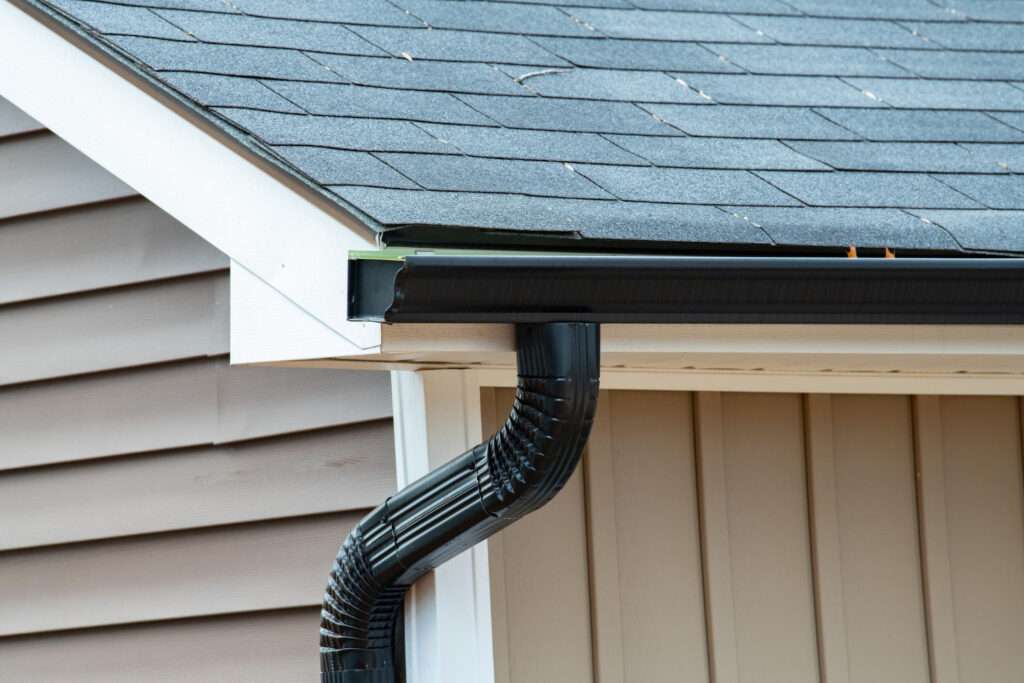
K-style gutters have a flat back that sits against the house and a curved, decorative front that looks a lot like the crown molding inside a home. The name comes from the shape of the gutter’s side profile, not the letter K itself.
- Pros: holds more water than a half-round gutter of the same width, mounts flat against the house, and comes in long seamless runs
- Cons: the inside corners can catch leaves and dirt, so they may need cleaning more often under trees
Half-Round Gutters
Half-round gutters are shaped like a pipe cut in half the long way. You often see them on older and historic homes, and sometimes in copper.
- Pros: a classic look, and the smooth, rounded inside lets leaves and grit wash through more easily
- Cons: holds less water than a K-style gutter of the same width, needs special round hangers to hold it up, and usually pairs with round downspouts
Box Gutters
Box gutters are square channels. On many older buildings, they are built right into the edge of the roof and lined with metal, so you can’t see them from the street.
- Pros: carries a lot of water and keeps a clean roof line
- Cons: when a built-in box gutter leaks, the water often goes straight into the roof or walls, and repairs are more involved
Fascia Gutters
A fascia gutter does two jobs at once. Normally, gutters hang from the fascia board, the long trim board along the edge of your roof. With fascia gutters, the gutter itself is shaped to cover that edge, so it acts as both the trim and the gutter.
- Pros: a smooth, built-in look with no separate gutter hanging off the house
- Cons: less common, and usually costs more to install and replace
| Gutter style | Look | Water it can carry | Best for |
| K-style | Flat back, decorative front | High | Most homes |
| Half-round | Rounded, classic | Lower for the same width | Older and historic homes |
| Box | Square, often built in | High | Older and some commercial buildings |
| Fascia | Gutter and trim in one piece | High | A built-in, clean roof line |
Gutter Sizes: 5-Inch vs 6-Inch (and Bigger)
Gutter size is the width across the top opening of the gutter. The two common sizes for homes are 5 inches and 6 inches.
- 5-inch gutters are the standard size on most homes. For an average house with a simple roof, they usually do the job.
- 6-inch gutters hold noticeably more water. They are worth considering if your roof is large, steep or has long slopes that send a lot of water to one spot.
Three things decide the size you need:
- How much roof drains into each gutter. A long, wide roof slope sends more water to that gutter.
- How steep the roof is. Water runs off a steep roof faster, and it can shoot over a small gutter.
- How hard it rains. Louisville gets heavy spring and summer downpours. If your gutters overflow in big storms even when they are clean, the size may be too small.
For example, a two-story home with a steep, wide back roof might do fine with 5-inch gutters on the front and still overflow at the back. Upgrading just the back run to 6 inches can solve it.
The downspout has to keep up too. Downspouts are often named by their size in inches, like “2×3” or “3×4,” which is the size of the rectangular pipe. A bigger gutter usually pairs with a bigger downspout, often a 3×4 with 6-inch gutters. Getting the downspout size right, and adding enough of them, keeps water moving instead of backing up.
How to Tell What Size Gutters You Have
- From a ladder, measure across the top opening of the gutter, from the front lip to the back edge.
- If it measures about 5 inches, you have 5-inch gutters. About 6 inches means 6-inch gutters.
- You can also check the downspout. A small 2×3 downspout usually means 5-inch gutters.
Only measure from a ladder if you are comfortable doing so safely. Otherwise, a roofer or gutter installer can check during a visit.
Gutter Materials in Brief
Style and size come first, but material affects how long your gutters last:
- Aluminum: the most common choice, rust-free and light
- Vinyl: the lowest cost, but it can crack in the cold and wear out sooner
- Steel: stronger than aluminum, but it can rust over time
- Copper: the most expensive, long-lasting, and popular on historic homes
You will also hear about seamless gutters. These are made on-site in one long piece for each side of the house, so there are no joints along the run to leak. If you are comparing materials, it helps to know what gutters cost for each one before you decide.
Which Type of Gutter Is Best for Your Home?
There is no single best gutter for every house. It depends on your home and what matters most to you:
| Your situation | A good fit to consider |
| A typical modern home | 5-inch K-style |
| A large or steep roof | 6-inch K-style with larger downspouts |
| An older or historic home | Half-round, often in copper or aluminum |
| Lots of trees nearby | Half-round, or K-style with guards |
| The lowest upfront cost | Vinyl K-style, keeping in mind it may not last as long |
| A built-in, clean roof line | Fascia or box gutters |
Types of Gutters FAQs
What are the three types of gutters?
The three styles you see most often on homes are K-style, half-round and box gutters. Fascia gutters are a fourth, less common option.
What is the cheapest type of gutter?
Vinyl K-style gutters usually cost the least upfront. They also tend to wear out sooner, so the cheapest option today may not be the cheapest over time.
What is the best alternative to gutters?
Some homeowners use rain chains, which guide water down a chain of cups instead of a closed pipe. Others rely on ground drainage, like gravel beds along the house. These can work on small roofs or homes with wide roof overhangs, but for most homes, gutters with properly placed downspouts protect the foundation better.
Can you mix gutter styles on one house?
Yes. Some homeowners use half-round gutters on the front for looks and K-style on the back for capacity. Just make sure each run has the right downspout for its size and shape. If leaves are a problem, adding gutter guards can work with most styles.
Not Sure Which Gutters Fit Your Home?
The right gutter comes down to your roof’s size and steepness, your home’s style and how much water your yard has to handle. A quick measurement of your roof and current gutters usually makes the answer clear.
GoRoofGuys is a licensed and insured contractor serving Louisville and Cincinnati. Our team can measure your roof, look at where water is going now and recommend a gutter style and size that fits your home. Reach out to schedule a free estimate for gutter installation.