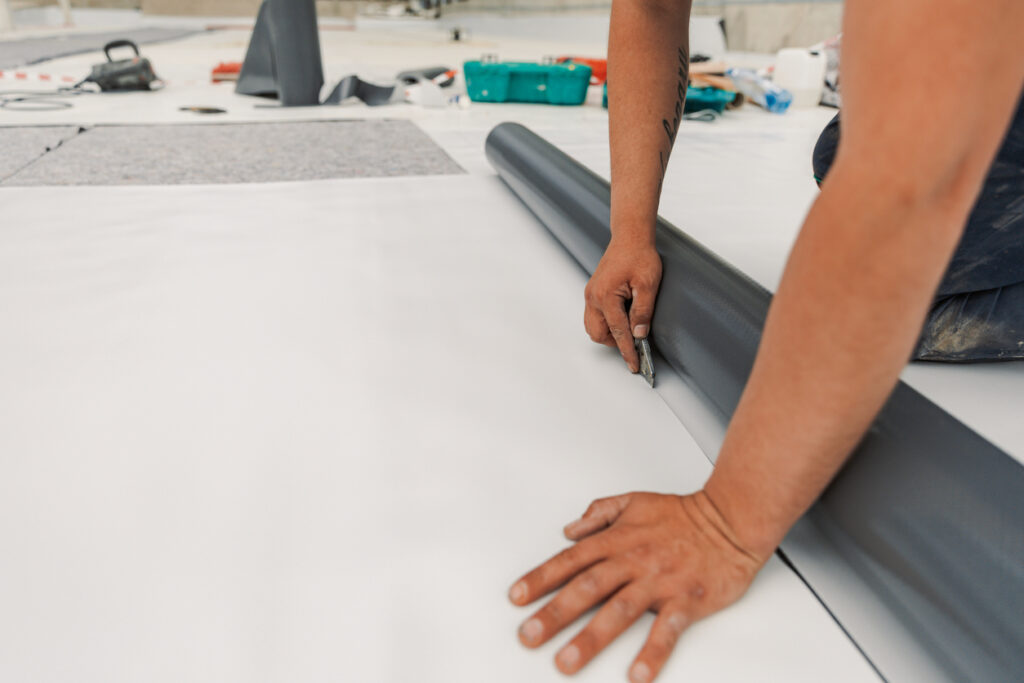
TPO roofing is one of the most popular roofing systems for flat and low-slope commercial buildings today. It is a single layer of tough, light colored material that is rolled out across the roof and welded together at the seams to create one solid, watertight surface.
If you own or manage a commercial building in Louisville or Cincinnati, there is a good chance TPO is already on your roof or is one of the top options your commercial roofing contractor will recommend. This guide covers what TPO roofing is made of, how it is installed, what it typically costs, how long it lasts, and the honest pros and cons, so you can decide if it is the right fit for your building.
What Is TPO Roofing?
TPO stands for thermoplastic polyolefin. It is a single-ply roofing membrane, which means the whole roof is covered with one continuous layer of material instead of individual pieces layered on top of each other.
Think of it this way. Asphalt shingles are like tiles, overlapping piece by piece. TPO is more like one large sheet unrolled across the roof, with each section welded to the next using heat, so there are no gaps or overlapping edges for water to work its way into.
TPO is most commonly used on commercial and industrial buildings with a flat or low slope roof, such as retail stores, warehouses, schools, and office buildings.
What Is TPO Roofing Made Of?
TPO membrane is made from a blend of plastic and rubber, reinforced with a layer of polyester fabric in the middle for extra strength. This is what lets it flex without tearing and hold up against weather over the years.
TPO comes in a few standard thicknesses, and thickness affects both price and how long the roof will last.
| Thickness | What it means for you |
|---|---|
| 45 mil | Thinner and more budget-friendly |
| 60 mil | The most common middle-ground choice for most buildings |
| 80 mil | Thicker and more durable, used on roofs that need extra protection |
A mil is a unit of thickness equal to one thousandth of an inch. For comparison, a standard credit card is about 30 mils thick, so even the thickest TPO membrane is still a fairly thin, flexible sheet.
How Is TPO Roofing Installed?
Installing a TPO roof usually follows these steps.
- Remove the old roof or prepare a cover board: This depends on the condition of the existing roof.
- Install insulation board: TPO membrane itself does not insulate a building, so this step is what actually helps control energy costs.
- Roll out and attach the TPO sheets: This is done one of three ways: mechanically fastened with screws and plates, fully adhered with a bonding adhesive, or attached using an induction welding system.
- Heat weld the seams: A hot air tool melts the edges of the membrane just enough to fuse each sheet to the next, creating one continuous, watertight surface.
- Install flashing: This goes around the edges of the roof and around any vents, pipes, or equipment that stick up through it, since these are the most common spots for leaks to start.
A properly installed TPO roof should have no visible gaps and no weak seams where water could get in.
Benefits of TPO Roofing
- Energy efficient: The light-colored surface reflects sunlight instead of absorbing it. For example, on a hot summer day, a TPO roof stays noticeably cooler to the touch than a dark asphalt roof, which can help lower air conditioning costs inside the building.
- Lightweight: TPO puts less stress on the building structure compared to some other flat roof systems, so most buildings can handle it without extra structural work.
- Watertight seams: Since the seams are heat welded rather than glued or taped, there are fewer weak points where a roof can start to leak.
- Lower material cost than PVC: TPO usually costs less than PVC membrane while still holding up well against weather and everyday wear.
What Are the Downsides of TPO Roofing?
TPO is a solid choice for most buildings, but it is not perfect. Here is what to know before you decide.
- Seam separation is the biggest risk: If the seams were not welded correctly during installation, they can pull apart over time. This is why hiring an experienced, certified installer matters more than almost anything else with a TPO roof.
- It does not insulate on its own: The membrane itself has no meaningful insulating value, so a separate layer of insulation board has to go underneath it, which adds a step and a cost to the project.
- Quality varies by manufacturer and thickness: A cheap, thin membrane will not perform or last as well as a thicker, higher-quality one, so it pays to ask what thickness and brand your contractor is quoting.
How Long Do TPO Roofs Last?
A TPO roof typically lasts 15 to 25 years, with well maintained roofs reaching up to 30 years, according to independent cost and lifespan research from HomeGuide. Thickness plays a big role in where a roof falls in that range.
| Membrane thickness | Typical lifespan |
|---|---|
| 45 mil | Lower end of the range, around 15 years |
| 60 mil | Middle of the range, around 20 years |
| 80 mil | Higher end of the range, up to 25 to 30 years with good maintenance |
Regular inspections and prompt repairs when a problem is spotted also go a long way toward reaching the higher end of this range.
How Much Does TPO Roofing Cost?
In the Louisville, KY area, TPO roofing typically costs 7 to 13 dollars per square foot installed for a standard project, according to Abrams Roofing, a Louisville-based roofing company. On more involved projects, the price can climb higher.
| Project type | Typical cost per square foot |
|---|---|
| Standard installation | 7 to 13 dollars |
| Complex project (full tear-off, upgraded insulation, or many roof penetrations) | 10 to 20 dollars or more |
A few things push a project toward the higher end of that range: removing and disposing of the old roof, adding thicker insulation to handle Louisville’s seasonal temperature swings, and working around a lot of vents, drains, or rooftop equipment. Roof size, membrane thickness, and insulation needs all play a part too. The only way to get an exact price for your building is a free, on-site estimate.
TPO vs EPDM: Which One Is Right for Your Building?
Both TPO and EPDM are common single ply roofing membranes, and the right choice depends on your building, your budget, and your climate. In general, TPO is more energy reflective and often costs less up front, while EPDM (a rubber membrane, usually black) has a longer track record and can perform well in colder climates where reflectivity matters less.
For a full side-by-side comparison that also includes PVC, see our guide on which roofing type is best.
Frequently Asked Questions
Is TPO cheaper than shingles?
TPO and asphalt shingles are usually used on different types of roofs. TPO is built for flat or low-slope commercial roofs, while shingles are made for sloped residential roofs. Because of that, a direct dollar-for-dollar comparison is not always meaningful. The best way to compare costs fairly is to get quotes for your specific roof type and size.
How long does TPO roofing take to install?
Most commercial TPO installations take a few days to a couple of weeks, depending on the size of the roof, the weather, and whether the old roof needs to be fully removed first.
Does TPO roofing need much maintenance?
TPO is fairly low maintenance compared to many roofing systems. A yearly inspection to check the seams, flashing, and drainage areas is usually enough to catch small problems before they turn into leaks.
Can TPO roofing be repaired instead of replaced?
Yes, in most cases. Small issues like a separated seam or damaged flashing can usually be patched or repaired rather than requiring a full roof replacement, as long as the damage is caught early.
Get a Free TPO Roofing Estimate
If you manage a commercial building in Louisville, Cincinnati, or the surrounding area and want to know if TPO roofing is the right fit, Go Roof Guys can help. Schedule your free estimate and get a straight answer on the best roofing option and cost for your building.