
When a roof is properly installed, most of what protects your home from water damage is completely invisible once the shingles are in place. One of the most critical hidden components is ice and water shield for roofing — a self-adhering waterproof membrane applied directly to the roof deck before any other material goes on. Most homeowners have never heard of it, but it is often the last line of defense between a major interior water damage event and a dry, protected home during severe weather.
Whether you are replacing your roof, building a new home, evaluating a roofing contractor’s proposal, or simply trying to understand what a quality installation looks like, here is everything you need to know about roofing ice and water shield — what it is, where it belongs, whether your home requires it, and what it realistically costs.
What Is an Ice and Water Shield?
Ice and water shield for roofing is a waterproof underlayment membrane made from rubberized asphalt that bonds directly to the roof deck via a pressure-sensitive adhesive backing. Unlike standard roofing felt (tar paper), which is simply laid over the deck surface and mechanically fastened with staples or nails, roofing ice and water shield adheres to the wood and creates a continuous, monolithic waterproof barrier that holds even when punctured.
The self-sealing property is what sets this product apart from every other underlayment on the market. When a roofing nail is driven through the membrane during shingle installation, the rubberized asphalt compound grips the nail shaft tightly and seals around it — preventing any water from traveling down the nail hole and into the wood deck below. This behavior is analogous to how a rubber gasket seals around a fastener, and it is the reason ice and water shield for roofing provides protection that nothing else can match at the most common leak initiation points.
The top surface of roofing ice and water shield is either granulated — for traction during installation and use under asphalt shingles — or smooth — for use under metal roofing, tile, or slate where a compatible surface is needed. The bottom adhesive surface is protected by a release liner that is peeled away as the membrane is unrolled and pressed onto the deck.
Where Should Ice and Water Shield Be Installed?
Ice and water shield for roofing is a targeted product — it is not typically applied to the entire roof deck, but rather to the specific zones where water infiltration risk is highest. Here are the standard installation locations:
Eaves
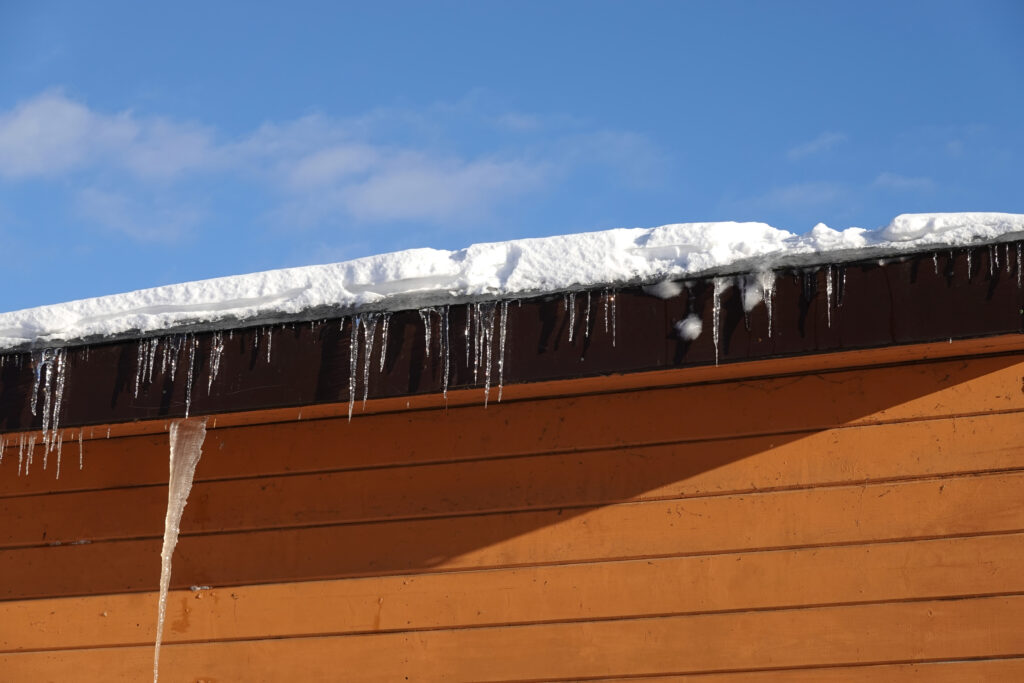
The eave — the lowest edge of the roof — is the zone most vulnerable to both ice dam damage and wind-driven rain penetration. During winter, when heat from a poorly ventilated attic melts snow on the upper roof, the meltwater runs down to the colder eave overhang and refreezes. Over multiple freeze-thaw cycles, this creates a growing ice dam at the roof edge. As additional meltwater backs up behind the dam, it can creep under the bottom rows of shingles and leak into the attic or wall cavities.
Roofing ice and water shield installed at the eaves provides a waterproof barrier that stops this backed-up water from penetrating the deck. In cold climates, the International Residential Code requires the membrane to extend at least 24 inches past the interior wall line — far enough up the slope to remain above the ice dam even in severe winters.
Valleys
Roof valleys — the V-shaped channels where two roof slopes converge — concentrate the highest volume of water runoff on any roof. During heavy rain, water from both slopes channels into a narrow area simultaneously, creating intense localized pressure against the roofing materials. Valley shingles experience more water movement, more wear, and more stress than any other part of the roof. Roofing ice and water shield installed full-width through each valley provides a waterproof failsafe at this high-risk zone, protecting the deck even if valley shingles are eventually displaced or worn through.
Around Penetrations
Chimneys, skylights, plumbing vent pipes, exhaust fans, and any other penetration through the roof deck create inherent vulnerabilities where the roofing material must be cut and sealed around an object. The interface between the penetration and the surrounding roofing is always a potential leak point regardless of how carefully it is flashed. Applying ice and water shield for roofing around all penetrations provides backup waterproofing beneath the flashing — effective even if the flashing eventually develops a gap or the sealant cracks and contracts.
Rake Edges
In regions with significant wind-driven rain — coastal areas, storm-prone zones, high-altitude locations — the rake edges (the sloped edges of a gable roof) are candidates for ice and water shield coverage. Wind can drive rain horizontally under shingles at the roof edge during severe storms. Protecting the rakes with self-adhering membrane closes this vulnerability at minimal additional material cost.
Is Ice and Water Shield Required by Building Code?
Yes, in many jurisdictions — and those requirements have expanded as the product’s effectiveness has become better documented over decades of real-world performance.
The International Residential Code requires an ice barrier at the eaves in regions where the average January temperature is 25°F or below. The ice barrier must extend from the drip edge up the slope to a point at least 24 inches inside the interior wall line. This applies to new construction and to full roof replacement projects in permitted climates.
Individual states, counties, and municipalities frequently adopt requirements that exceed the IRC baseline. Some jurisdictions require ice and water shield in all roof valleys regardless of climate zone. Others mandate it around all penetrations on any permitted project. In high-wind coastal zones, coverage at rake edges may also be required.
Even where roofing ice and water shield is not specifically mandated by code, virtually every reputable roofing contractor installs it as standard practice. The cost of the material is small relative to the total project cost. The protection it provides is substantial. And the liability of omitting it on a roof that later leaks at a preventable location is a risk no professional wants to carry.
Do All Roofs Actually Need Ice and Water Shield?
Not every square foot of every roof requires ice and water shield for roofing, but virtually every roof benefits from its use at the appropriate locations. Whether full-deck coverage is warranted depends primarily on climate and roof design.
In warm, dry climates without freeze-thaw cycles and with minimal wind-driven rain events, a quality synthetic underlayment can handle the mid-slope areas adequately. However, even in these climates, the high-risk zones — eave edges, valleys, and penetrations — still warrant the self-adhering membrane. The incremental cost of targeted coverage at these locations is trivial compared to the cost of a single water infiltration event.
In cold climates, the northern United States, Canada, and high-altitude areas where ice dams form regularly, ice and water shield is not optional — it is essential. The cost of a single ice dam leak event — which can damage insulation, drywall, flooring, electrical systems, and structural wood — typically ranges from $5,000 to $15,000 or more. Against that exposure, comprehensive eave and valley coverage is an easy investment to justify.
For low-slope roofs with pitches below 4:12, roofing ice and water shield coverage over the full deck is standard practice regardless of climate. The lower the slope, the more slowly water drains, and the greater the vulnerability to any gap or defect in the primary roofing material above.
Types of Ice and Water Shield
Granule-Surface Membrane
The most commonly used type for residential applications. The granulated top surface provides traction for workers walking the roof during installation and creates a compatible interface for the asphalt shingles installed on top. Available in standard and high-performance grades from virtually every major roofing manufacturer including Grace, GAF, Owens Corning, and Henry.
Smooth-Surface Membrane
Designed for use under metal roofing panels, clay or concrete tile, or natural slate — materials where a granulated surface would create incompatibility or adhesion issues. The smooth top surface provides a clean, consistent base and is available in both standard and high-temperature formulations.
High-Temperature Ice and Water Shield
Standard rubberized asphalt membranes have temperature limits and can soften under extreme heat — a risk under metal roofing in hot climates, where the steel surface can reach 180°F or more on a summer afternoon. High-temperature roofing ice and water shield is formulated to remain stable and maintain its seal at temperatures up to 250°F or higher. It is the required specification for ice and water shield for roofing under metal panels in most hot-climate applications.
How Much Does Ice and Water Shield Cost?
Roofing ice and water shield typically costs $0.25–$0.75 per square foot for the material, depending on type, thickness, and brand. Premium products and high-temperature formulations sit at the upper end of this range. For a typical 2,000-square-foot home with standard eave and valley coverage, total material cost for ice and water shield runs approximately $200–$600 — a small fraction of any total roof replacement budget.
Installation labor for roofing ice and water shield is included in standard roofing project quotes. It is applied during the deck preparation phase before shingles or other surface materials are installed, and it does not add meaningfully to project duration.
The comparison that matters: a single ice dam leak event can cause $5,000–$15,000 in interior damage. A valley leak that goes undetected for a season can cause structural rot requiring $10,000 or more in remediation. The cost of adequate ice and water shield coverage is not close to these figures. The investment in prevention is clear.
Conclusion
Ice and water shield for roofing is the hidden layer that performs when conditions are at their worst — during ice dams, wind-driven rain events, and the gradual deterioration of other roofing components over time. It is the product you never think about until you do not have it and water finds its way through. For the small incremental cost it adds to a roofing project, the protection it provides is disproportionately large.
When Go Roof Guys installs or replaces your roof, proper underlayment — including roofing ice and water shield applied at all critical locations — is always part of the job. We do not cut corners on the components that matter most. Contact us today to learn more about what a quality installation looks like, or to schedule a free assessment of your current roof.