Homeowners often feel confused when they look at a damaged roof. They wonder if their policy will cover the cost of a new structure. Navigating an insurance roof replacement requires a clear understanding of your specific policy terms. Most plans protect against sudden events rather than gradual wear and tear. Knowing the difference helps you prepare for the financial aspects of home care.
How Roof Insurance Coverage Works
Standard policies generally protect your home from specific perils. These perils include events such as fire or falling objects. Your roof insurance typically pays for damage caused by external forces.
Most companies offer two types of reimbursement methods for these claims.
By considering age and prior wear, actual cash value coverage compensates for the roof’s current value. Coverage for replacement costs allows for a total roof restoration, free from depreciation deductions. You receive enough funds to buy new materials at current market prices.
Depreciation plays a major role in how much money you receive. An older roof is worth less in an adjuster’s eyes. You must check your policy to see which coverage type you own.
Storm Damage Commonly Covered by Insurance
Weather occurrences are the most often cited reason homeowners file insurance claims. Most policies cover damage from hail or high winds. These events are frequently unavoidable and occur suddenly.
Hail Damage to Shingles
Hail creates unique patterns of destruction on a roof. Large stones can cause bruising on the surface of a shingle. This impact often leads to significant granule loss. Granules protect the asphalt layer from the sun. Exposed mats become brittle and leak over time.
Wind Damage and Missing Shingles
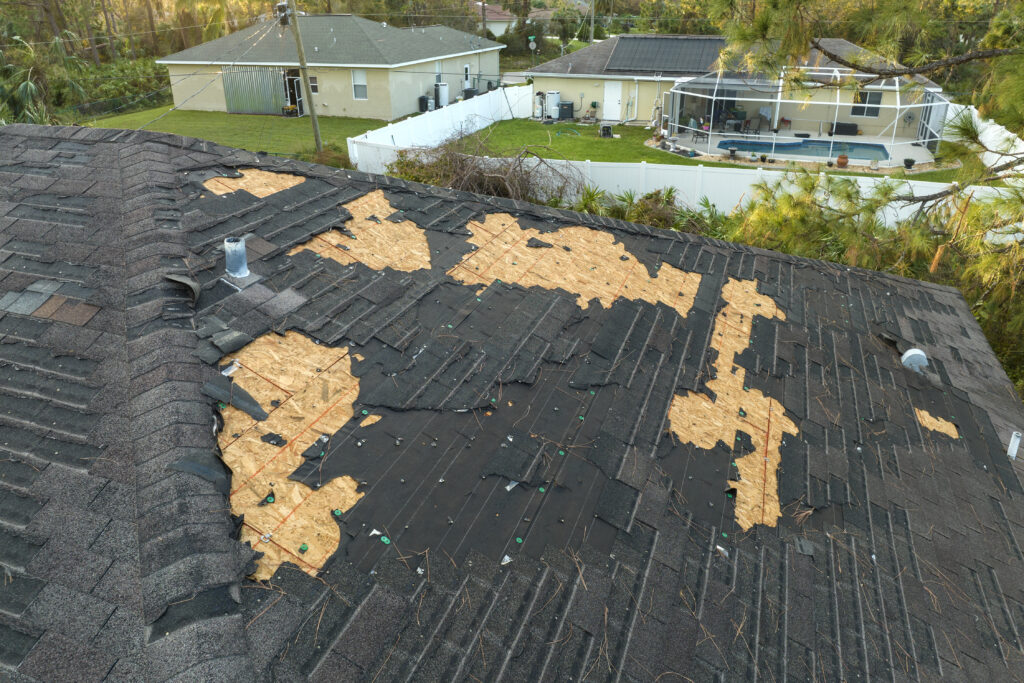
High winds can lift shingles away from the roof deck. This uplift breaks the adhesive seal that keeps the roof watertight. You might see shingles that are creased or folded back. Rain can damage the exposed wood if shingles are missing.
Hurricane and Severe Storm Impact
Massive storms bring a combination of wind and heavy rain. Some regions require special deductibles for these events. These deductibles are often a percentage of your total home value. An insurance roof replacement becomes necessary when the structural integrity is lost. Regarding storm claims, coastal regions usually have more stringent regulations.
The Insurance Information Institute provides data on how windstorm facts affect national claim trends.
Water Damage Related to Roof Failure
Water intrusion is a common consequence of roof damage. Insurance usually covers interior leaks if a covered peril caused the hole. A tree limb falling through the roof is a clear example of this situation. The policy covers the roof repair and the damaged ceiling.
Neglect is viewed differently by providers. A slow leak from an old pipe or worn shingle is usually not covered. You must prove that the water entered because of a sudden event. Maintaining your roof insurance depends on your ability to show the cause of the loss.
Fire and Falling Object Damage
Fire is a primary peril in almost every homeowner’s policy. This includes damage from lightning strikes or nearby wildfires. Falling objects are also covered in most cases. A heavy branch might snap during a storm and land on your house. Approval of an insurance roof replacement depends on the underlying reason for the loss. If the tree were dead and you ignored it, the claim might be denied.
Roof Damage Insurance Does Not Cover
Every homeowner should be aware of particular policy exclusions.
- Insurance is not meant to be a house maintenance program. It does not cover general wear and tear over many years.
- Poor maintenance is a leading reason for denied claims. You are responsible for keeping the roof in good condition.
- Improper installation by a previous contractor is also excluded.
- Many companies will not cover roofs that exceed a certain age limit. Most shingles have a service life of twenty years. Insurance companies expect you to replace the roof yourself once it expires.

The Insurance Roof Replacement Claim Process
Starting a claim requires a specific set of steps.
- You should first have a professional inspect the damage. They can tell you if the problem is worth a formal claim.
- You must make temporary repairs to prevent further water entry.
- Keep your receipts for any plastic tarps or plywood used.
- An insurance adjuster will visit your home to verify the loss. They look for specific signs of storm impact or fire.
- The company will then issue an approval or a denial. Approval letters detail the scope of work allowed.
- You can then schedule the actual replacement with a contractor. The timeline depends on material availability and weather.
How to Improve Roof Insurance Claim Approval
- Your greatest tool throughout the claims process is documentation.
- Take photos of your roof before any storms occur. These images serve as a baseline for your home’s condition. Store your photos in a digital cloud for easy access.
- Record the date of the storm or event accurately.
- Reporting the damage quickly is essential for a successful claim. Most policies have a time limit for filing.
- A professional inspection provides the technical evidence an adjuster needs. Contractors can spot damage that is invisible from the ground.
When to Call a Roofing Professional
A licensed contractor understands the nuances of roof damage. They can identify subtle signs of hail or wind uplift. Their expertise helps validate your claim to the insurance company.
For a comprehensive evaluation, contact Go Roof Guys. Professional roofers will provide the necessary paperwork for an insurance-eligible roof replacement. They ensure the estimate covers all necessary materials. Having an expert on your side simplifies the communication with your provider.
Conclusion
Understanding what your policy covers protects your finances. Most roof insurance plans focus on sudden and accidental damage. Yearly, you ought to go over your coverage limits. Keep your roof in good repair to avoid claim denials. Expert evaluations help you navigate the complexities of restoration.
If you suspect your home has storm damage, contact a professional roof replacement consultant today. Our team can evaluate your roof and assist with the insurance roof replacement process.