Metal roofing is not one single product. It comes in different panel styles and different metals, and the right combination for your home depends on your budget, your roof’s pitch, and how long you want it to last.
You may also hear metal roofing called a “tin roof,” a name left over from decades ago. Almost no metal roofing installed today is actually made of tin, but the nickname stuck. This guide covers the main panel styles first, then the materials, followed by real cost and thickness numbers so you can compare your options with confidence.
Metal Roofing Types by Panel Style
Panel style refers to how the metal is shaped and fastened to your roof.
| Panel style | What it is | Best for |
|---|---|---|
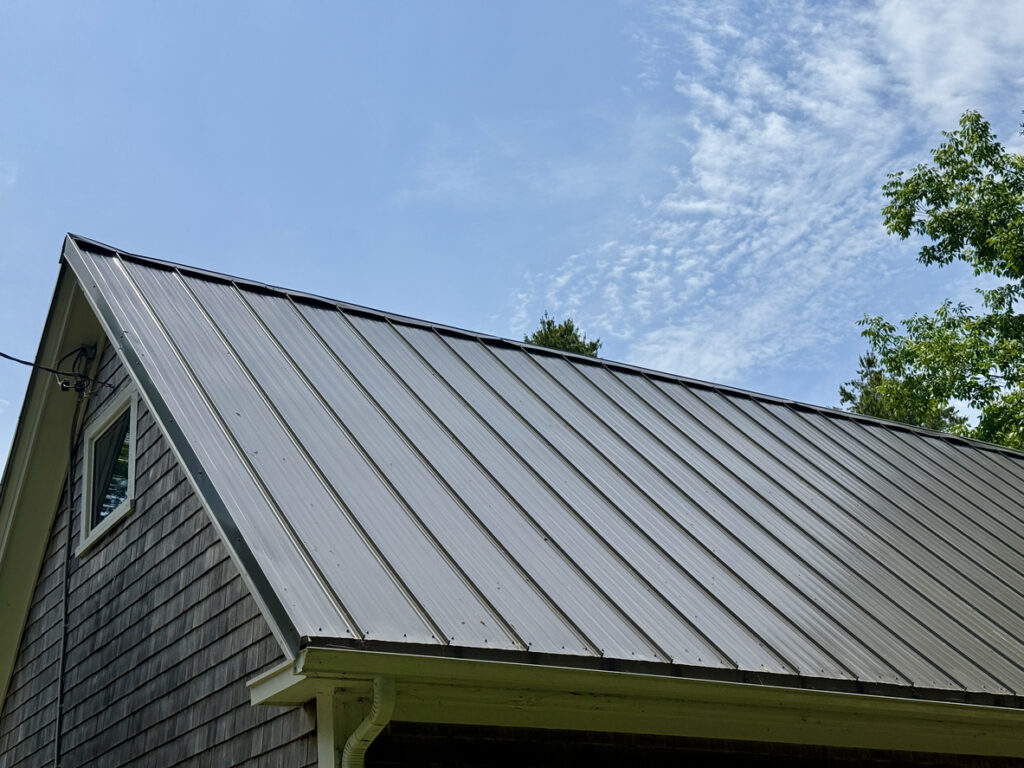
| Standing seam | Raised, interlocking seams with hidden fasteners | Low slope roofs, a clean modern look, minimal maintenance |
| Corrugated (exposed fastener) | Wavy or ribbed sheets with visible screws | Barns, outbuildings, and budget conscious projects |
| Metal shingles and tiles | Shaped and textured to mimic traditional shingles, slate, or tile | Homeowners who want metal’s durability with a traditional look |
Standing seam costs more upfront, but its hidden fasteners mean almost no upkeep over the life of the roof. Corrugated panels are the most budget-friendly option, though their exposed screws need to be checked and occasionally retightened over time. Metal shingles and tiles cost more than corrugated panels, but they blend in well on streets full of traditional-looking homes. See our full pros and cons of metal roofs for how these tradeoffs compare to other roofing materials.
Metal Roofing Types by Material
Beyond panel style, the metal itself makes a big difference in lifespan and price.
| Material | Typical lifespan | Notes |
|---|---|---|
| Steel | 40 to 60 years | Most affordable, strong, a common choice for most homes |
| Aluminum | 40 to 60 years | Lightweight, resists rust, popular in coastal areas |
| Zinc | 100 years or more | Develops a protective patina over time, premium priced |
| Copper | 100 years or more | Longest lasting, most expensive, ages to a distinctive green patina |
Think of it this way. Choosing steel is like choosing a reliable daily car, it does the job well for decades at a fair price. Choosing copper is like choosing something that you will hand down to your grandchildren, but at a much higher price today.
How Much Does Each Type of Metal Roofing Cost?
Cost varies quite a bit depending on the panel style you choose.
- Standing seam typically runs 9 to 16 dollars per square foot installed;
- Corrugated (exposed fastener) typically runs 7 to 12 dollars per square foot installed;
- Metal shingles typically run 6 to 14 dollars per square foot installed;
These figures are consistent with HomeGuide’s metal roof cost research. For a full roof, a 1,500 square foot home typically runs 7,500 to 24,000 dollars total, with a national average around 23,800 dollars. A smaller 1,200-square-foot home will usually land somewhat below that range.
The material itself, steel, aluminum, zinc, or copper, also moves your price within each panel style’s range. A standing seam roof in copper will cost far more than the same panel style in steel.
What Gauge Metal Roofing Is Best?
Gauge measures how thick the metal panel is, and it works backward from what you might expect. A lower gauge number actually means a thicker, heavier panel.
- 24 gauge is about 30 percent thicker than 26 gauge, holds up better against hail and high wind, and costs more;
- 26 gauge is thinner, less expensive, and still a reasonable choice in milder climates or for exposed fastener panels;
If you live somewhere with frequent severe weather, paying more upfront for 24 gauge usually pays off in fewer dents and less long-term damage.
Which Type Is Best for Your Home?
There is no single best type of metal roofing. The right choice depends on your budget, your roof’s pitch, your local climate, and how long you plan to stay in the home.
- Choose standing seam if a clean look and minimal maintenance matter most, and your budget allows for the higher upfront cost;
- Choose corrugated if the budget is the top priority, or the building is a barn, shed, or other outbuilding;
- Choose steel or aluminum if you want a strong, affordable metal that lasts decades without a premium price tag;
- Choose zinc or copper only if a century-long lifespan and a distinctive look matter more to you than upfront cost;
If you are still deciding between metal and another material entirely, our comparison of metal roofing vs asphalt shingles can help you weigh the bigger picture.
Frequently Asked Questions
What are the top 5 metal roofing options?
There is no single official ranked list, but standing seam, corrugated, metal shingles, steel, and aluminum are the five most commonly chosen metal roofing options for homes.
What is the biggest problem with metal roofs?
The most common complaint is the higher upfront cost compared to asphalt shingles. A close second is the need for an experienced installer, since a poorly installed metal roof can develop leaks at the seams and around the fasteners.
What is the cheapest type of metal roof?
Corrugated, exposed fastener steel panels are typically the lowest cost per square foot of any metal roofing option, though they do require more maintenance over time than standing seam.
Can you install metal roofing over an existing roof?
In many cases, yes, though it depends on your current roof’s condition and local building codes. A roofing contractor can inspect your existing roof and tell you whether it is a suitable candidate for a metal roof installed on top.
Get a Free Metal Roofing Estimate
If you are in Louisville, Cincinnati, or the surrounding area and want to know which metal roofing type fits your home and budget, Go Roof Guys can help. Explore our residential roofing services or schedule your free estimate today.