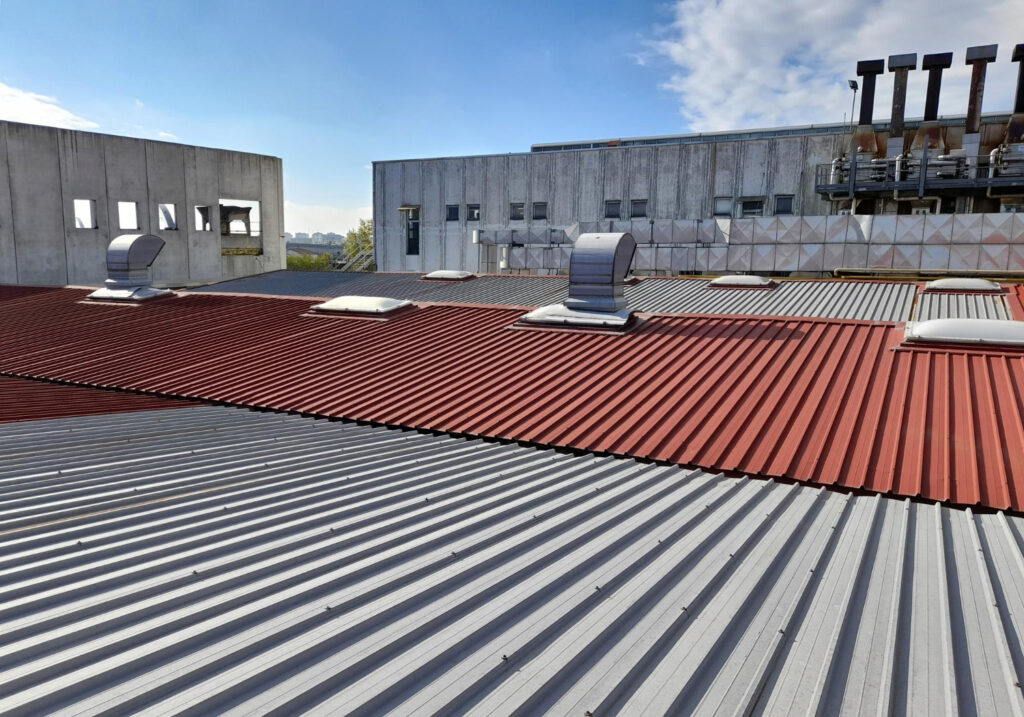
A typical Commercial roof replacement costs between $4 and $14 per square foot, depending on the roofing system, meaning a full replacement on a mid-sized 10,000-square-foot commercial building generally runs $40,000 to $140,000. The wide range comes down mainly to the roofing system chosen — TPO and EPDM sit on the lower end, while built-up and specialty systems run higher — along with the building’s condition, accessibility, and drainage design.
Whether you’re managing a retail space, office building, or industrial facility, this guide breaks down what drives commercial roofing costs, how different systems compare, and what to expect from the replacement process.
Why Commercial Roofing Costs Differ From Residential
Commercial roofs are almost always flat or low-slope, which changes both the materials used and how they’re installed compared to a sloped residential roof. Flat roofs also have to manage standing water rather than shedding it immediately, which means drainage design, insulation, and membrane seams all carry more weight in the total cost. Scale matters too — commercial roofs are typically measured and priced per square foot across thousands of square feet, rather than per “square” (100 sq ft) the way residential roofing is often quoted.
Access and safety requirements add cost as well. Commercial projects often require OSHA-compliant fall protection systems, crane or hoist access for materials on taller buildings, and coordination around occupied space below — all factors that rarely apply to a single-family home replacement.
Commercial Roofing Costs by System Type
| Roofing System | Cost per Sq Ft | Typical Lifespan |
| TPO (thermoplastic) | $4 – $8 | 20 – 30 years |
| EPDM (rubber) | $4 – $9 | 20 – 25 years |
| Modified bitumen | $5 – $10 | 15 – 20 years |
| Built-up roofing (BUR) | $6 – $12 | 20 – 30 years |
| Metal (standing seam) | $8 – $14 | 40+ years |
TPO has become one of the most common choices for new commercial installations, largely because it balances cost, energy efficiency (its reflective white surface reduces cooling costs), and ease of installation. EPDM remains a reliable, well-understood option with a long track record. Metal systems cost more upfront but can outlast two or three replacement cycles of a membrane roof.
What Affects Commercial Roofing Costs
- Roof size — larger roofs benefit from some economy of scale per square foot, but total cost still scales with area
- Tear-off vs. recover — removing existing layers costs more than installing a new system over a sound existing roof, where code allows it
- Roof accessibility — height, parking structure limitations, and equipment access all affect labor and crane costs
- Insulation upgrades — adding or upgrading insulation during replacement increases upfront cost but often pays back through energy savings
- Drainage design — poor drainage or ponding water issues may require tapered insulation or additional drains, adding cost
- Permits and code requirements — commercial permitting varies by municipality and can affect both cost and timeline
Repair, Restoration, or Full Replacement?
A full tear-off and replacement isn’t always the most cost-effective path. If the existing roof structure is sound and the membrane damage is limited, a roof coating or restoration system can extend the roof’s life at a fraction of replacement cost, with far less disruption to daily operations.
See our guide, A Guide to Best Roof Coating to see whether restoration is a viable option before committing to a full replacement.
Signs Your Commercial Roof May Need Replacement
- Recurring leaks that reappear in different spots after repairs
- Visible ponding water that doesn’t drain within 48 hours after rain
- Membrane blistering, cracking, or seams pulling apart
- Rising energy bills that suggest failing insulation
- The roof is approaching or past its system’s expected lifespan
A professional roof assessment, including a moisture scan, is the most reliable way to tell whether a building is facing a repair, a restoration candidate, or a genuine full replacement — guessing based on visible wear alone often misses moisture trapped beneath the surface.
Choosing a Commercial Roofing Contractor
- Confirm experience specifically with commercial and low-slope systems, not just residential roofing
- Ask for a detailed scope of work, including tear-off, insulation, drainage, and membrane specifications
- Check for proper licensing, insurance, and OSHA safety compliance for commercial work
- Ask how they plan to minimize disruption to your business operations during the project
- Request references from similar commercial projects, ideally of comparable size
Budgeting and Financing a Commercial Roof Replacement
Given the scale of commercial roofing costs, many building owners finance the project rather than paying entirely out of pocket, whether through a commercial loan, a lease-to-own equipment-style arrangement, or financing offered directly through the roofing contractor. It’s also worth checking whether your policy covers storm or wind damage before assuming the full cost falls on the building’s capital budget — commercial property insurance often has different terms than residential homeowners policies, so review your specific policy language or ask your broker directly.
It’s also worth budgeting for costs beyond the roofing system itself: temporary weather protection if the project spans multiple phases, potential code-required upgrades uncovered during tear-off, and any business interruption if operations need to pause during specific phases of the work. A detailed, itemized proposal from your contractor should account for these possibilities upfront rather than surfacing as surprise change orders mid-project.
What to Expect During the Project
Most commercial roof replacements begin with a roof assessment, including moisture scans to check for wet insulation hidden beneath the membrane. From there, the project is scoped, permitted, and scheduled — often planned around weather windows and, where possible, around the building’s slower operating periods to minimize disruption.
Depending on size, a commercial replacement can take anywhere from a few days for a smaller building to several weeks for a large industrial roof. Larger projects are often phased section by section, allowing portions of the building to remain weathertight throughout rather than exposing the entire roof deck at once. Expect regular check-ins from the project manager, and ask upfront how they’ll handle unexpected weather delays, since flat roofing work is more weather-sensitive than sloped residential installation.
Frequently Asked Questions
How long does a commercial roof replacement take?
Smaller commercial roofs can be completed in a few days, while larger buildings, especially those requiring a full tear-off, may take several weeks depending on size, weather, and material availability.
Can my business stay open during a commercial roof replacement?
In most cases, yes. Reputable contractors plan work to minimize disruption, and most of the work happens on the roof itself rather than inside the building, though noise should be expected during business hours.
How often should a commercial roof be replaced?
This depends heavily on the roofing system — TPO and EPDM systems typically last 20 to 30 years with proper maintenance, while metal systems can last 40 years or more. Regular inspections help catch issues early enough that restoration, rather than full replacement, is often still an option.
Does commercial insurance cover roof replacement?
Storm, wind, and hail damage are commonly covered under commercial property policies, similar to residential coverage, while damage from age or lack of maintenance typically is not. Reviewing your specific policy or speaking with your broker is the best way to confirm what applies to your building.
Is a commercial roof replacement tax deductible?
Commercial roofing costs are generally treated as a capital improvement and depreciated over time rather than deducted in a single year, though certain projects may qualify for accelerated depreciation under current tax rules. A tax professional familiar with commercial property can confirm how this applies to your specific situation.
Get a Commercial Roofing Estimate
Go Roof Guys works with property owners and managers on commercial roofing projects of all sizes, from small office buildings to large industrial facilities.
See our commercial roofing services page for more on the systems and materials we install, or request a free estimate to get a cost breakdown specific to your building.
Call Go Roof Guys in Louisville at 502-977-7663 or Cincinnati at 513-513-7663 to schedule a commercial roof assessment.