You may not have thought about it, but you’ve certainly noticed that not all roofs look the same. This article will introduce you to different types of roofs, including the most common styles.
Hip Roof Definition
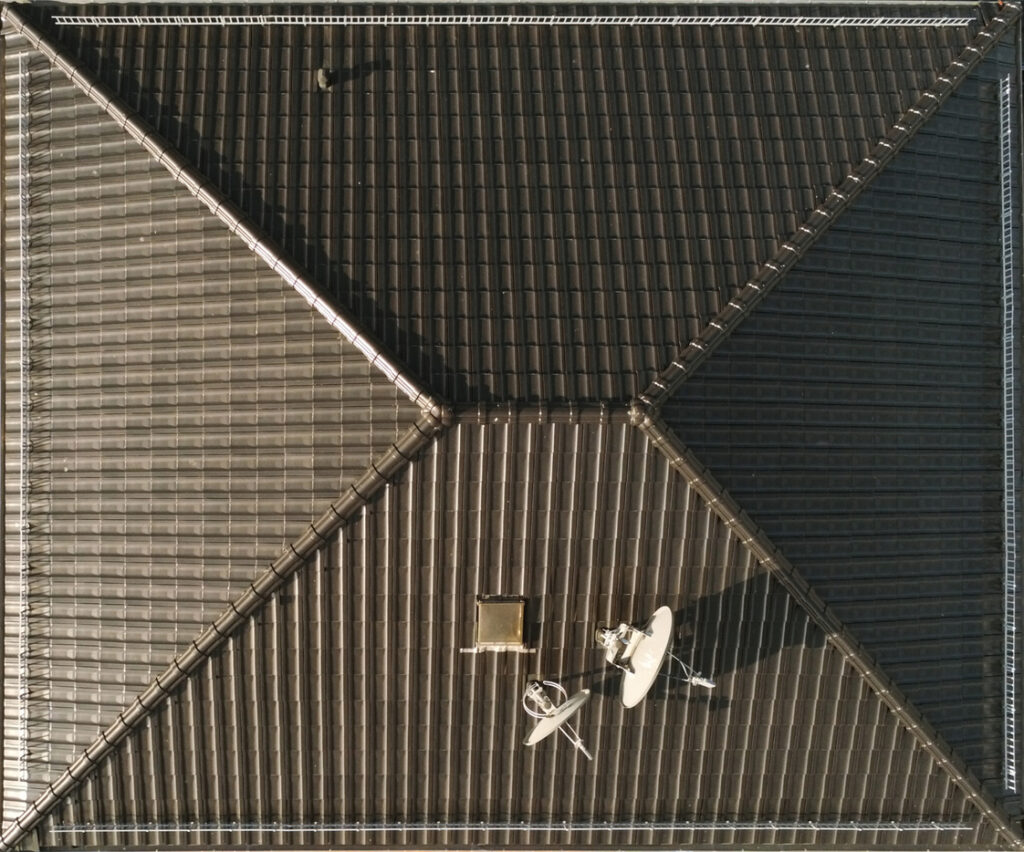
A hip roof has four slopes that meet each side of the house. The roof is the same height all around and is connected by the ridge at the top of the house. The hip is the sloping line that connects one side of the roof to the other.
How to know it’s a hip roof? If you see the roof sloping toward you on all sides, that’s a hip roof.
Types of Hip Roofs
Hip roofs aren’t a one-size-fits-all design. A few variations show up regularly on both new builds and renovations, and each solves a slightly different layout or style problem:
- Simple Hip Roof: The most common version, with four equal sides sloping up to meet at a single ridge. On a square footprint, this forms a pyramid.
- Cross Hip Roof (also called a Hip-and-Valley Roof): Formed when two or more hip sections intersect, creating valleys where they meet. This is the go-to shape for L-shaped homes or houses with multiple wings.
- Dutch Gable Roof (sometimes called a Dutch Hip Roof): A hip roof with a small gable section built into the upper portion. That extra gable can open up more attic space and ventilation than a full hip roof allows, while still keeping most of the wind-resistance benefits.
- Half-Hip Roof (also known as a Jerkinhead Roof): Essentially a gable roof with the top point clipped off and replaced by a small hip section, which squares off the peak instead of leaving it pointed.
How Are Hip Roofs Framed?
A ridge board runs along the top of the roof, with hip rafters angling down to each corner to form the roof’s signature slopes. Common rafters fill in the main faces, while shorter jack rafters connect the hips to the eaves along the ends.
This design is also naturally wind-resistant: since all four sides lean inward against each other, the roof braces itself with less extra support than a gable roof needs. That effect holds up best at a pitch of 35 degrees or steeper.
Gable Roof Definition
A gable roof has at least one side of the house that does not meet the end of a sloping roof. Instead, the flat side of the house connects to the roof. This flat side is called the gable. The flat side can be on any side of the house, but popular styles include the flat side being on the side or front of the house.
How to know it’s a gable roof? If you see at least one side of the house reach the edge of the roof, that’s a gable roof.
Pros and Cons of Hip Roofs
Pros:
- Best if you live in an area with high winds. Hip roofs will better withstand places that are prone to hurricanes and tornadoes. They are durable which can potentially allow for a lower insurance rate.
- Aesthetically pleasing. A hip roof is popular for certain styles of houses. If you’re selling a house with a hip roof, people will appreciate the design.
Cons:
- Expect a higher price tag. Hip roofs are more expensive because there are more roofing materials included in a hip roof as well as engineering.
- Lack of attic space. If you are hoping to have more than a crawl space, you may want to consider a different roofing style.
- Not great for snowy conditions. A hip roof is not well designed for allowing the snow to shed.
Other Types Of Roofs
One could say that hip and gable roofs are the basis for many types of roofs.
Common types of roofs include:
- Butterfly – the roof is concave, meeting in the middle. The design allows for water harvesting and allows for natural light.
- Mansard – the roof resembles a hip roof with a shallower sloped portion at the top. The design allows for extra attic space.
- Shed – the roof is one piece and slanted in one direction. The design is great for water drainage as well as shedding snow.
What To Consider When Choosing A Roof Style
- The shape of your house. If your house is a long rectangle or multiple squares, the type of roof you choose will need to fit your house’s shape. Otherwise, you could end up with water damage and a high electricity bill.
- Where you live. Are you in a place where there’s a lot of snow or sun? Maybe both? The climate will help dictate which roofing style makes the most sense for your home.
- Cost. If you have the choice between two roofs, the price tag may be the determining factor. Some styles will cost more to build than others.
Tip: Building a new house and unsure which type of roof to go with? Look around your neighborhood. Chances are that the homes built before you took these pros and cons into consideration. For example, if you live in an area with a lot of wind, many of the neighboring houses will have a hip roof.